Detailed Guide to Khula in Pakistan Under Pakistani Family Law Regulations
- lawyerinlahore
- Nov 11, 2025
- 5 min read
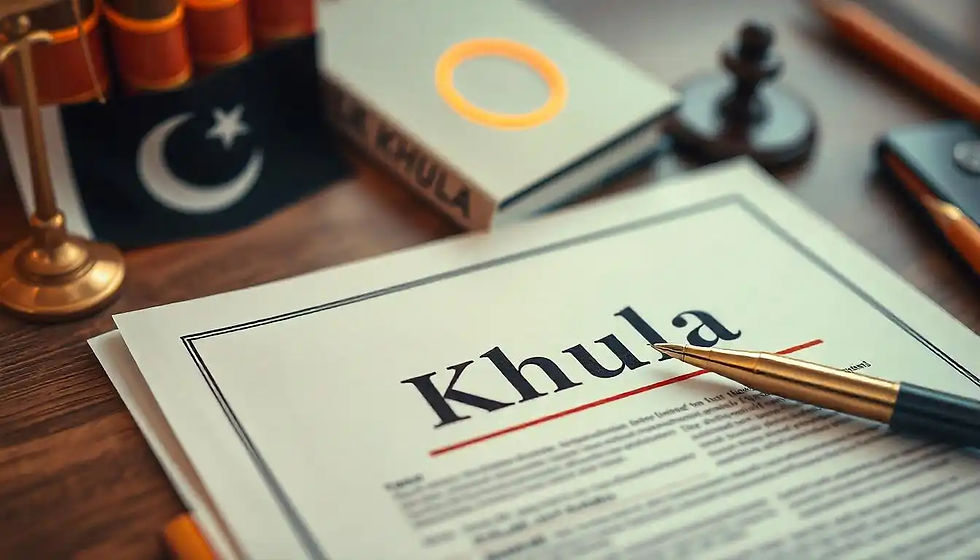
Complete Guide to Khula Procedure in Pakistan Under Pakistani Law
Khula is a form of divorce in Pakistan initiated by a wife when she no longer wishes to continue her marriage. Unlike talaq, which is pronounced by the husband, Khula allows the wife to seek separation under the provisions of Khula Pakistani Law. Understanding the Khula Procedure in Pakistan is essential for women, especially in cases where mutual consent is difficult. This process is regulated under Pakistan Family Law, ensuring that women can legally claim their right to divorce while following all legal formalities.
The Khula Process in Pakistan involves several legal and administrative steps. It is important for women to know that filing for Khula is not just about submitting papers; it includes attending court proceedings, sometimes mediation, and completing specific documentation known as Khula Papers in Pakistan. Whether you are a resident of Pakistan or an overseas Pakistani seeking Khula, the law provides clear guidelines to facilitate a smooth legal procedure.
Understanding the Legal Framework for Khula in Pakistan Family Law
In Pakistan, Khula Pakistan Family Law is governed by the Muslim Family Laws Ordinance and the civil courts. Under these regulations, a wife can file for Khula if she feels she cannot continue the marriage due to personal, social, or emotional reasons. Importantly, Khula requires the wife to often return the dower (mahr) or any other benefits received from the husband during marriage.
Legal experts or a divorce lawyer in Pakistan play a key role in guiding women through the process. They help in drafting accurate petitions, ensuring all legal requirements are met, and representing the client during court hearings. Understanding the Khula rules in Pakistan is crucial because any oversight can lead to delays or dismissal of the case.
Step-by-Step Khula Procedure in Pakistan for Filing Divorce Legally
The Khula Procedure in Pakistan starts with the wife approaching a family court with her petition. The court first attempts mediation between the spouses, encouraging reconciliation if possible. If reconciliation fails, the court proceeds with hearings. A typical Khula Process in Pakistan includes the following steps:
Submit a formal Khula application at the local family court.
Attach essential documents, including CNIC, marriage certificate, and any supporting evidence.
Complete Khula Papers in Pakistan as required by the court.
Attend mediation sessions, if the court suggests trying reconciliation.
Appear in court hearings for presenting the case and answering any queries.
Return dower (Mahr) or other entitlements if required as part of the settlement.
Receive the court’s final Khula order once all legal formalities are fulfilled.
For women living abroad, the Overseas Pakistani Khula Law allows them to file petitions through consulates or local representatives. Online platforms now provide services for filing petitions, referred to as online Khula application Pakistan, making it convenient for overseas Pakistanis to initiate the process without physically visiting Pakistan.
Filing Khula in Pakistan Online and Key Requirements for Documentation
With the rise of digital services, it is now possible to understand how to file Khula in Pakistan online. Many family courts in Pakistan accept digital submissions for Khula, allowing women to start the legal procedure remotely. However, the physical verification of documents and court attendance may still be required at later stages.
Essential documents include the marriage certificate, national ID card (CNIC), any evidence supporting claims for Khula, and completed Khula Papers in Pakistan. The court may also require proof of communication with the husband regarding separation. This structured approach ensures that the Khula Procedure in Pakistan remains transparent and legally sound.
Khula Fees in Pakistan and Associated Costs for Legal Divorce
Understanding Khula Fees in Pakistan and associated Khula Cost in Pakistan is vital before filing a case. The fees vary depending on whether the case is filed in a local court, through online channels, or requires legal representation by a Khula lawyer. Generally, filing fees are nominal, but legal representation and documentation charges may increase the overall cost.
Many courts provide fee structures online for transparency. For overseas Pakistani Khula Law, and nadra divorce certificate online check, additional administrative costs, such as consular fees and document attestation, may apply. It is recommended to confirm fees with the respective family court or legal expert before starting the procedure.
Steps to Ensure Successful Khula Process in Pakistan Without Legal Hurdles
Following the correct Khula process in Pakistan can prevent unnecessary delays. Women are advised to:
Consult a divorce lawyer in Pakistan to understand legal rights and obligations.
Gather all essential Khula Papers in Pakistan including CNIC, marriage certificate, and supporting evidence.
Ensure the Khula case fees in Pakistan are paid promptly and receipts are obtained.
Attend court hearings as per scheduled dates to avoid case dismissal.
Follow guidance on Khula rules in Pakistan to ensure compliance with Islamic and civil law requirements.
By carefully adhering to these steps, the procedure becomes smoother and more predictable.
Rights of Women Under Khula in Pakistan and Legal Protections
The Khula in Pakistan process not only facilitates divorce but also protects the rights of women during and after marriage. The wife has the right to reclaim her dower and other entitlements while initiating separation. Courts ensure that the Khula Pakistan Family Law is applied fairly, particularly in cases where husbands attempt to delay or obstruct the process.
Islamic principles, as interpreted in Pakistani law, emphasize that Khula should be granted fairly when a woman seeks separation. Hence, Khula in Islam serves as a religious foundation for legal procedures, reinforcing the wife’s right to request divorce without undue complications.
How Overseas Pakistanis Can File Khula Under Pakistani Law
For overseas Pakistanis, filing for Khula may seem challenging, but the Overseas Pakistani Khula Law simplifies the procedure. Women can submit applications through the nearest Pakistani embassy or consulate. The process involves submitting necessary documentation, such as CNIC, passport, and marriage certificate, along with completed Khula Papers in Pakistan.
Online guidance on how to file Khula in Pakistan is available on government websites, including steps for digital submission and document attestation. By following these steps carefully, overseas Pakistanis can navigate the Khula Process in Pakistan efficiently without needing prolonged travel or legal complications.
Role of Lawyers and Court in Facilitating Khula Procedure in Pakistan
A Khula lawyer is essential for navigating the legal system efficiently. Lawyers assist in drafting petitions, representing clients during hearings, and explaining the Khula rules in Pakistan. They also ensure that the Khula case fees in Pakistan are calculated correctly and avoid unnecessary expenditure.
Family courts in Pakistan are structured to mediate disputes and finalize divorces following a fair procedure. Women are encouraged to remain informed about court schedules and procedural requirements to ensure timely completion of the Khula Process in Pakistan.
Conclusion: Simplifying the Khula Procedure in Pakistan for Women
In summary, Khula Procedure in Pakistan provides a structured legal way for women to seek divorce while safeguarding their rights. Understanding the requirements, such as Khula Papers in Pakistan, Khula Fees in Pakistan, and online filing options, ensures a smooth process.
By consulting a Khula lawyer, following legal steps, and being aware of Overseas Pakistani Khula Law, women can complete the Khula Process in Pakistan efficiently. Awareness of the Khula rules in Pakistan, combined with proper documentation and timely court attendance, reduces complications and secures the rights guaranteed under Khula Pakistan Family Law.
This comprehensive guide aims to simplify the complexities surrounding Khula in Pakistan, empowering women with knowledge to exercise their legal rights confidently.
Comments